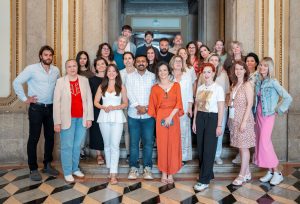
The 2026 edition of the Erasmus+ Staff Week has just ended and we thank all participants for their presence, kindness and sharing of knowledge and experiences!
This edition hosted 34 representatives of 21 universities from 16 countries: Bangladesh, Bulgaria, Croatia, Cyprus, Germany, Greece, Iceland, Italy, Latvia, Poland, Portugal, Romania, Slovenia, Spain, The Netherlands and Turkey.
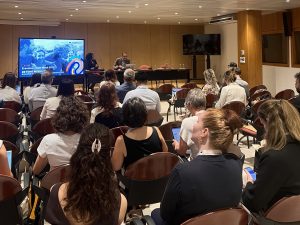
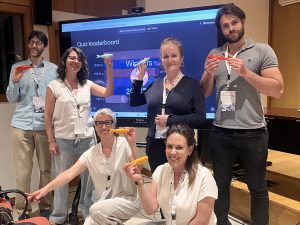
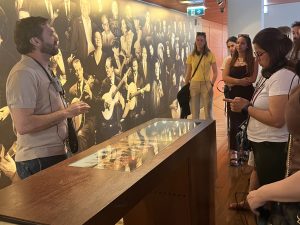
After the welcoming message from Prof. Paulo Bento, Vice-Rector for Internationalization and University Outreach, the sessions continued with a brief presentation of Universidade Aberta. The participants also had the chance to introduce themselves, as well as their universities and the work they carry out there. On this day, it was also possible to showcase a bit of the Portuguese language and culture through an interactive workshop.
The program counted with the participation of many professors and non-academic staff of Universidade Aberta, that contributed for a deeper insight on teaching and learning issues at a distance education university like Universidade Aberta, as well as its organic structure and its most important concerns: research and open science; open educational resources; open repositories; quality, innovation and digital transformation; microcredentials; sustainability; multimedia production.
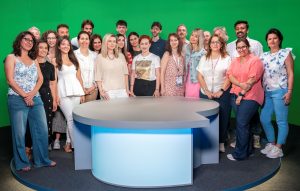
In the last day, participants were received at Ceia Palace, the headquarters of the University, in which are the rectory and the multimedia area. There, participants shared a brief testimony in video about their experience at Universidade Aberta of Portugal.
This week offered participants an opportunity not only to get to know more about Universidade Aberta, its specific virtual pedagogical model and organizational structure, but also to establish new contacts useful for future partnerships, research projects and new Erasmus mobility flows.
Universidade Aberta of Portugal is a public distance education university. All study programs are taught fully online. Students carry out their studies anywhere in the world by accessing the institutional e-learning platform implemented according to the Virtual Pedagogical Model of the University – a model internally developped and externally recognized.